To Kill A Mockingbird is one of my all-time favorite books. I was completely shocked this morning when it was announced that Harper Lee was coming out with a followup. Go Set a Watchman, which will be released in July, is essentially a sequel to To Kill a Mockingbird, despite being completed first. From Lee:
"It features the character known as Scout as an adult woman and I thought it a pretty decent effort. My editor, who was taken by the flashbacks to Scout's childhood, persuaded me to write a novel (what became `To Kill a Mockingbird') from the point of view of the young Scout."
The premise of the book is that Scout (Jean Louise Finch) has returned to Maycomb from New York to visit her father, Atticus. She is forced to grapple with issues both personal and political as she tries to understand her father's attitude toward society, and her own feelings about the place where she was born and spent her childhood.
While I don't think anything can live up to Mockingbird, I'm absolutely looking forward to reading this.
*To age is to embrace a slow hurt inside and out, to collect scars like rings on a tree, dark and weathered and sometimes only visible if someone cuts deep enough. Scars keep the past just close enough to touch, but healing is forgetting. Healing invites another cut. Healing is the tide that smoothes away our line in the sand. For life to begin, the damage must be permanent.
Dale Sampson, The Samaritan*
Thanks to the great people over at Blank Slate Press I received an advanced copy of their debut novel, The Samaritan by Fred Venturini. I wasn't sure what to expect after reading the description on their site.
Dale Sampson is a nobody. A small town geek who lives in the shadow of his best friend, the high school baseball star, it takes him years to even gather the courage to actually talk to a girl. It doesn't go well. Then, just when he thinks there's a glimmer of hope for his love life, he loses everything.
When Dale runs into the twin sister of the girl he loved and lost, he finds his calling--he will become a samaritan. Determined to rescue her from a violent marriage, and redeem himself in the process, he decides to use the only "weapon" he has--besides a toaster. His weapon, the inexplicable ability to regenerate injured body parts, leads him to fame and fortune as the star of a blockbuster TV reality show where he learns that being The Samaritan is a heartbreaking affair. Especially when the one person you want to save doesn't want saving.
The Samaritan is a brutally funny look at the dark side of human nature. It lays bare the raw emotions and disappointments of small town life and best friends, of school bullies and first loves, of ruthless profiteers and self-aggrandizing promoters—and of having everything you know about human worth and frailty questioned under the harsh klieg lights of fame.
I started reading the book and instantly knew it would be something right up my alley. Dale, the main character, is painted in such a way that I immediately related with his middle and high school social struggles. I really felt for Dale when he was unable to speak to the girls in his class (and as we learn, this never went away). Because the character felt so authentic, I could picture myself (or almost any of my friends) in his situation. Dale wasn't the only character spewing authenticity. His best friend Mack encompassed parts of many of my friends as well. It felt like I really knew these characters as I read the novel.
The setting was also something that seemed to take on a life of its own. Perhaps it's because I'm also from the Midwest, but I could picture any number of the places described in the book perfectly. In fact, the only issue I had with it is how quickly it jumped from location to location. One minute he's in a town fighting the local meth dealer and the next he's meeting with a studio executive to create a television series. I really think that the stories that took place in each of those settings could have been developed more. Perhaps some more confrontations with the abusive husband meth dealer and his wife or perhaps a bit more conflict with Doc before Dale jetted off to California. It would have really been great to see Dale suffer a bit more while in California. Sure, his battle with his inner demons and the people creating the show were apparent, but it could have used a little more story development to show how truly conflicted Dale was.
All in all it was a great read. I really enjoyed it and can't wait to read more from Venturini. Venturini's story and style reminds me a lot of Chuck Palahniuk, and that's a good thing. I'm constantly looking for authors that can tell a story where everything about it feels real. This is one of those. I don't want to go into great detail about the story and plot, read it for yourselves, it's worth it.
Last night, I purchased a book called 1920: The Year of Six Presidents. I never knew that six men who were/would be Presidents of the United States ran in that election. It should be a very interesting book. Does anyone have any suggestions for some more reading regarding 20th Century American history?
A natural part of growing up for most of us is the loss of imagination. It doesn't totally disappear, we just stop using it as much or start using it in different ways. Instead of imagining being an astronaut and flying to the moon we imagine that two-story house with the white picket fence. Our dreams are more down to earth. I think that's why books that have magical qualities, books that stretch the imagination and push it to its limits are rare in books written for adults. There are obvious exceptions. For example, sci-fi and fantasy genres are full of magical and imaginative settings, characters, and adventures that take us to our youth. When you look at those books though, those are targeted to a specific set of people, people who never lost that great imagination. It's rare that something will grab the mainstream and make us feel like kids again. The Lord of the Rings, thanks to the movies, found a new generation of fans. The Harry Potter series made adults remember what it was like to be a kid. Those seem to be exceptions to the rules though.
A couple years ago I read a book entitled The Iowa Baseball Confederacy. It was written by W.P. Kinsella, the author of Shoeless Joe (which became the excellent movieField of Dreams). This is one of those books that is so over the top and out of reality that it makes you feel like a kid again. It makes you feel the magic as you read it. It's not only about that though. No, not unlike Shoeless Joe, The Iowa Baseball Confederacy also has deeper meaning, and that is about a young man's relationship with his dead father. The setting is in Iowa where a young man is trying to save his family's legacy that a game played by the Iowa Baseball Confederacy All-Stars and the Chicago Cubs was played in 1908. No one remembers it ever happening, and there is no proof of this game ever existing, except in the main character and his dad's heads. What ensues is a story so magical that you can't help be caught up in it. It's so good, I just started reading it again. Do yourself a favor, forget you're an adult for a day, or maybe two, or three, and pick up this book, or any book that hits you with that same type of magic that you felt when you were a kid. It'll be worth it, if only for a short while.
I've been in a reading mood lately. I don't know what it is but I can't get enough of it. Friday night I bought two books, A Good and Happy Child and The Husband.
A Good and Happy Child was a pretty good book by first time novelist Justin Evans. It's a book that explores demons, both literal and figurative. The book seemed pretty good at the store and the reviews made it sound excellent. I have to admit, it was a pretty decent book. I enjoyed the way it was told, in the present and through journal entries about what the main character remembered from childhood. I was a bit disappointed in the scare factor. Some of the reviews were equating it to a modern Exorcist, but it wasn't anywhere near as creepy as said novel. It was still a decent and quick read. I was able to finish it in a day.
The other book was Dean Koontz's The Husband. This was on the bargain shelf, and I am a Koontz fan, so I picked it up. I really like the direction Koontz has gone over the past few years. He's done less supernatural-type novels and done more thrillers. This was a great thriller that kept me turning the pages wanting to know what was to happen next. The only disappointing thing in the book was how quickly everything was resolved. Usually Koontz is fast at conflict resolutions, but this one seemed too easy. Too fast.
Yesterday I went to Barnes and Noble because Chuck Palahniuk came out with a new book called Snuff. I also noticed that Koontz came out with a fourth book in his Odd Thomas series called Odd Hours. I'm almost finished with Snuff, which is classic Palahniuk, and can't wait to start Odd Hours. I've basically been reading a book a day for the past five days. I can't get enough.
I was browsing some best books of 2007 lists and found one by an author named R.M. Kinder that lives in Missouri. The book, entitled An Absolute Gentleman is about a serial killer. I went to Amazon.com and searched for it and was instantly hooked and had to buy it.
Inspired by her own brush with a serial killer, Kinder has created a fictional representation that is chilling in its normalcy, haunting in its intensity, and stunning in its portrayal of sheer, sadistic madness. Taciturn English professor Arthur Blume launches his narrative by boldly stating that he is believed to have murdered as many as 17 women. Yet what most outrages him, now that he has been incarcerated, is that journalists are depicting him as a monster. He pens a memoir to correct this impression. In it, he describes in lavish detail the outfitting of his newly rented rooms in the small university town of Mason, Missouri; demurs over particulars of his illicit love affair with a fellow professor; and shares self-deprecating anecdotes about his gallant championing of a maligned colleague. Tucked among these decorous tidbits, however, are tantalizing clues to the demon within, one Kinder allows to emerge as stealthily as a cobra sliding from its bamboo basket. The addition of a self-explanatory epilogue regarding her personal experience detracts only slightly from Kinder's otherwise spellbinding debut novel, a pitch-perfect rendition of the cunning malevolence that can lie hidden beneath the guise of refined civility.
The book was great. It was an easy read and kept me interested the entire time. It wasn't a bloody, gory story, even though it was about a serial killer. When you think about it, it makes sense that it wasn't, since the story was told through the eyes of the killer. She taps into this character so well, his coldness without showing cruelty, his calm monotone manner of speaking. You can see and hear this guy speak. He's right in front of you and what makes it chilling is how so matter-of-factly he describes everything. Near the end of the book, it's even more surprising that you start to feel sorry for this guy. We don't hate him for being a murderer, in fact, when he does murder someone in the book it's hardly an event, but more of just a happenstance that occurs between talking about life in the fictional town of Mason, Missouri. What made it even better was the descriptions of Union Station in St. Louis, giving descriptions of the mall and the fudge factory where the candy makers sing. This made the character of Arthur Blume even more real. This book was so good, I highly recommend it, once you start reading it, you won't be able to put it down.
I was at the mall Christmas shopping today and came across a book while waiting in line to check out. It was in the Bargain Books section. The book is Tupac Shakur Legacy. Originally priced at $45, I picked this gem up for $4.99. It's kind of sad that it went for this cheap. I was even more shocked when I opened the book and saw just how cool it is. The book is about Tupac's life, but the way it presents it is great. I've seen this done with World War II books before, but never a biography. What it does is includes reproductions of things from Tupac's life with it. There's programs from when he attended his school for the performing arts, poetry written in his own handwriting, pages from the Gridlock'd script, his recording contract with Death Row Records, and various other documents. It is a really cool book. I'm so glad I went to the mall today and saw this.
Sometimes when reading a book I think how great a movie it could be. Of course, with some books, others see the same potential and make a horrible movie out of it (Michael Crichton's Timeline is a superb example of a great book and horrible movie). Now, I'm usually drawn to a specific style of writing and I think it would be hard for these books to be made into movies. I don't think there is much money in making movies off some of these unless they are handled with care and done right.
Neanderthal by John Darnton- This is a great book about archaeologists who stumble upon a community of Neanderthals living in Tadjikistan, high in the mountains, cut off from the rest of the world. Think Indiana Jones type story, but without the Nazis. Rumor has it the rights to this book have been sold to Steven Spielberg and DreamWorks, but I doubt we'll see this as a movie anytime soon.
Survivor-Chuck Palahniuk- Great book. Starting from chapter 47 and working it's way backwards, it tells the story of Tender Branson. Branson aged 33, has commandeered a Boeing 747, emptied of passengers, in order to tell his story to the "black box" while flying randomly until the plane runs out of gas and crashes. Again, movie rights have been bought for this book, but it seems unlikely to be made since it is very dark and movies about plane crashes post-9/11 are not likely to garner much in the way of box office success.
Rant: An Oral Biography of Buster Casey- Chuck Palahniuk- This would never make it as a movie, and probably shouldn't, but it would be an interesting one to see. Think the book and movie Breakfast of Champions. Great book. Really messed up movie that was.... just weird. This book was told in a unique way. The entire story was told by people who knew Buster Casey. The entire book is in interview format and sometimes the stories even contradict each other. If this was made into a movie it would either be the best movie ever made or the worst. There is no in-between.
Velocity-Dean Koontz- None of Dean Koontz's books have worked as movies. Anyone remember Phantoms? They just suck. Mostly because most of Koontz's works deal with the supernatural or aliens. Lately his books have been more suspense thriller. Velocity is one of those. If you recieved a note saying you had to choose who would live and who would die, what would you do? Billy Wiles's life spirals out of control after he finds a note on his windshield telling him that he has a choice: involve the police, and a lovely blonde schoolteacher dies. Do nothing, and an elderly woman active in charity work dies. The following events are a cat and mouse chase to stop the killer before he kills again. This could be an excellent movie that would keep you at the edge of your seat (much as the book did) the entire time.
I'm sure there are more books I'd like to see turned into movies, but so far that's all I can think of. I think if these were made, and made with care, they could be really great and do quite well at the box office.
I just finished reading Michael Eric Dyson's Know What I Mean? Reflections on Hip Hop. It is a brilliant, insightful discussion on hip hop and its history, it's problems, and how it relates to society as a whole. Anyone who is interested in what hip hop really is about and where it's going needs to read this. My particular favorite parts of this book are the discussion of the older generation's hatred of hip hop (just as the previous generation's parents hated Soul, Funk, Rock, etc), and why that has hurt hip hop and caused (or at least reinforced) some of the problems found in the hip hop culture today (materialism, misogyny, violence). If hip hop was embraced by the past generation when hip hop was at it's best, in terms of social and political statements, then it could have, in my opinion, a very different culture today. If they fostered and nurtured the creativity instead of blasting it, then maybe the hip hop youth wouldn't have rebelled, or at least not as much. Of course, the shunning of the new by the old isn't the only cause of the current state of hip hop, many factors are to blame, such as Reagan era economic policies, the introduction of crack into the urban centers of America (which was ignored if not helped by the CIA), and the prejudiced justice system, among other things.
In the last chapter, before the Outro written by Nas, Dyson talks about Nas' symbolism in releasing a hip hop record that states hip hop is dead. This wasn't to be taken literal, it was commentary on how clever rhetoric was "replaced by the mindless redundancy of themes we're all too familiar with: women, weed, wine, cars, and jewelry. The thug persona has replaced skillful exploration of thug's predicament: hustling in a culture where crime is the only option of the economic vulnerable." The movement started by Nas is a response to this mass-marketed culture. So is hip hop dead? By saying so Nas proved the exact opposite (which was no doubt intentional). He brought it to the forefront of musical discussion. It made people think about what was actually being put out by record companies. Conscious rappers like Common, Kanye West, Talib Kweli, and others are heard more. People started blasting Nas for saying it was dead. Others agreed. His mission was (at least) partially successful. People were talking. Of course the consumer is the real judge. The hip hop culture will always be there. The question is, what image will be shown to the masses. On September 11th people have a choice of which hip hop they want, an album by 50 Cent or and album by Kanye. Do you want the thug persona, or someone that explores broader social issues (such as blood diamonds in Kanye's song Diamonds from Sierra Leone) and that skillful exploration of the predicament?
I just read Chuck Palahniuk's new book Rant: An Oral Biography of Buster Casey. I am a huge fan of Palahniuk's cynical stories. Reminding me of Vonnegut, Palahniuk spins deep stories about how fucked up the world is and how poor society has become. My favorite book of his, Fight Club is the perfect example of this type of storytelling. In his latest book, Palahniuk does something I've never seen done, by him or any other author. The way he tells the story is so unique. The novel is about Buster Casey, but it doesn't follow like a traditional novel. It is not a story told by the main character, or even one person who knew the main character. Instead it is told by several people who knew the main character. It reads like a series of interviews with various people, almost like several witnesses telling the story of an accident that has happened, telling what they know in each scene until you reach the conclusion. The story was good, but what made the book was the way it was told. It couldn't have been told any other way. Palahniuk's outlook on the world still shows through via quotes the "witnesses" give about their friend Buster Casey, whether it be about his general character or actual things he said ("The future you have tomorrow won't be the same future you had yesterday.") These people, like the men in Fight Club are constantly looking for more in life, death, relationships, and challenging the status quo. These themes are seen all throughout his books. In case you are interested, here is a synopsis from amazon.com:
Buster Casey, destined to live fast, die young and murder as many people as he can, is the rotten seed at the core of Palahniuk's comically nasty eighth novel (after Haunted; Lullaby; Diary; etc.). Set in a future where urbanites are segregated by strict curfews into Daytimers and Nighttimers, the narrative unfolds as an oral history comprising contradictory accounts from people who knew Buster. These include childhood friends horrified by the boy's macabre behavior (getting snakes, scorpions and spiders to bite him and induce instant erections; repeatedly infecting himself with rabies), policemen and doctors who had dealings with the rabies "superspreader"; and Party Crashers, thrill-seeking Nighttimers who turn city streets into demolition derby arenas. After liberally infecting his hometown peers with rabies, Buster hits the big city and takes up with the Party Crashers. A series of deaths lead to a police investigation of Buster (long-since known as "Rant"—the sound children make while vomiting) that peaks just as Buster apparently commits suicide in a blaze of car-crash glory. This dark religious parable (there's even a resurrection) from the master of grotesque excess may not attract new readers, but it will delight old ones.
A literary legend has passed. Kurt Vonnegut, Jr. died last night. He was 84 years old. Slaughterhouse-Five, God Bless You, Mr. Rosewater, and Breakfast of Champions were my favorite books by Mr. Vonnegut. I happened to be re-reading Breakfast of Champions this week. Such a great book. Rest in peace to a great writer. He was such a great satirist influencing countless authors around the world, including another favorite of mine, Chuck Palahniuk, author of Fight Club. His book, Slaughterhouse-Five is considered by many people to be the best anti-war book ever written and has won many awards.
Kurt Vonnegut, whose dark comic talent and urgent moral vision in novels like “Slaughterhouse-Five,� “Cat’s Cradle� and “God Bless You, Mr. Rosewater� caught the temper of his times and the imagination of a generation, died last night in Manhattan.
Mr. Vonnegut suffered irreversible brain injuries as a result of a fall several weeks ago, according to his wife, Jill Krementz.
Like Mark Twain, Mr. Vonnegut used humor to tackle the basic questions of human existence: Why are we in this world? Is there a presiding figure to make sense of all this, a god who in the end, despite making people suffer, wishes them well?
For Christmas from my sister Lisa this year I received a great book entitled Ambitious Brew: The Story of American Beer. It is a fantastic read. It gives great insight into the business economy in America starting in the mid 1800's. Not only does it give the details of the biggest breweries in American history, but also insight into the people that made them the biggest. A-B, Pabst, and Schlitz would not have gotten as large as they did if it weren't for their ambitious presidents, brew masters, and marketers. The book does not just focus on the big guys though, the last third of the book focuses on the micro-breweries that sprung up in the late 1970's and 1980's and discussed what made the succeed, fail, and pave the way for future micros. One of the most fascinating chapters is the chapter on Prohibition and how the brewers survived (selling soda pop, ice cream, and non-alcoholic "near beer" among other things). The book is a fascinating read if you have any interest in history, business, or just beer. I highly suggest you read this book. Now, I know what many of you are thinking, history books are boring. Not this one. The narrative is quick, concise, and entertaining. There isn't anything boring about this book, it was perfect for a guy that lives in a beer town.
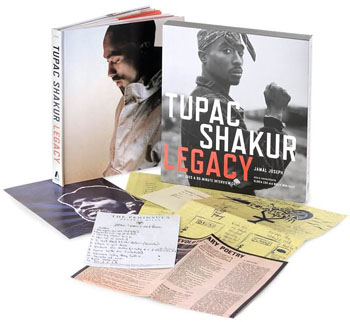 I was at the mall Christmas shopping today and came across a book while waiting in line to check out. It was in the Bargain Books section. The book is Tupac Shakur Legacy. Originally priced at $45, I picked this gem up for $4.99. It's kind of sad that it went for this cheap. I was even more shocked when I opened the book and saw just how cool it is. The book is about Tupac's life, but the way it presents it is great. I've seen this done with World War II books before, but never a biography. What it does is includes reproductions of things from Tupac's life with it. There's programs from when he attended his school for the performing arts, poetry written in his own handwriting, pages from the Gridlock'd script, his recording contract with Death Row Records, and various other documents. It is a really cool book. I'm so glad I went to the mall today and saw this.
 I just read Chuck Palahniuk's new book Rant: An Oral Biography of Buster Casey. I am a huge fan of Palahniuk's cynical stories. Reminding me of Vonnegut, Palahniuk spins deep stories about how fucked up the world is and how poor society has become. My favorite book of his, Fight Club is the perfect example of this type of storytelling. In his latest book, Palahniuk does something I've never seen done, by him or any other author. The way he tells the story is so unique. The novel is about Buster Casey, but it doesn't follow like a traditional novel. It is not a story told by the main character, or even one person who knew the main character. Instead it is told by several people who knew the main character. It reads like a series of interviews with various people, almost like several witnesses telling the story of an accident that has happened, telling what they know in each scene until you reach the conclusion. The story was good, but what made the book was the way it was told. It couldn't have been told any other way. Palahniuk's outlook on the world still shows through via quotes the "witnesses" give about their friend Buster Casey, whether it be about his general character or actual things he said ("The future you have tomorrow won't be the same future you had yesterday.") These people, like the men in Fight Club are constantly looking for more in life, death, relationships, and challenging the status quo. These themes are seen all throughout his books. In case you are interested,
 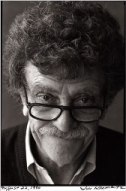 A literary legend has passed. Kurt Vonnegut, Jr. died last night. He was 84 years old. Slaughterhouse-Five, God Bless You, Mr. Rosewater, and Breakfast of Champions were my favorite books by Mr. Vonnegut. I happened to be re-reading Breakfast of Champions this week. Such a great book. Rest in peace to a great writer. He was such a great satirist influencing countless authors around the world, including another favorite of mine, Chuck Palahniuk, author of Fight Club. His book, Slaughterhouse-Five is considered by many people to be the best anti-war book ever written and has won many awards.
  For Christmas from my sister Lisa this year I received a great book entitled
  The book does not just focus on the big guys though, the last third of the book focuses on the micro-breweries that sprung up in the late 1970's and 1980's and discussed what made the succeed, fail, and pave the way for future micros. One of the most fascinating chapters is the chapter on Prohibition and how the brewers survived (selling soda pop, ice cream, and non-alcoholic "near beer" among other things). The book is a fascinating read if you have any interest in history, business, or just beer. I highly suggest you read this book. Now, I know what many of you are thinking, history books are boring. Not this one. The narrative is quick, concise, and entertaining. There isn't anything boring about this book, it was perfect for a guy that lives in a beer town.